INNOVATE & DEVELOP Our Ambition

In Milarex we take pride in actively promoting sustainable and affordable farmed raised salmon as a healthy protein source for a growing global population. We strive to be the benchmark for safe and sustainable salmon processing.
Thomas Farstad - CEO
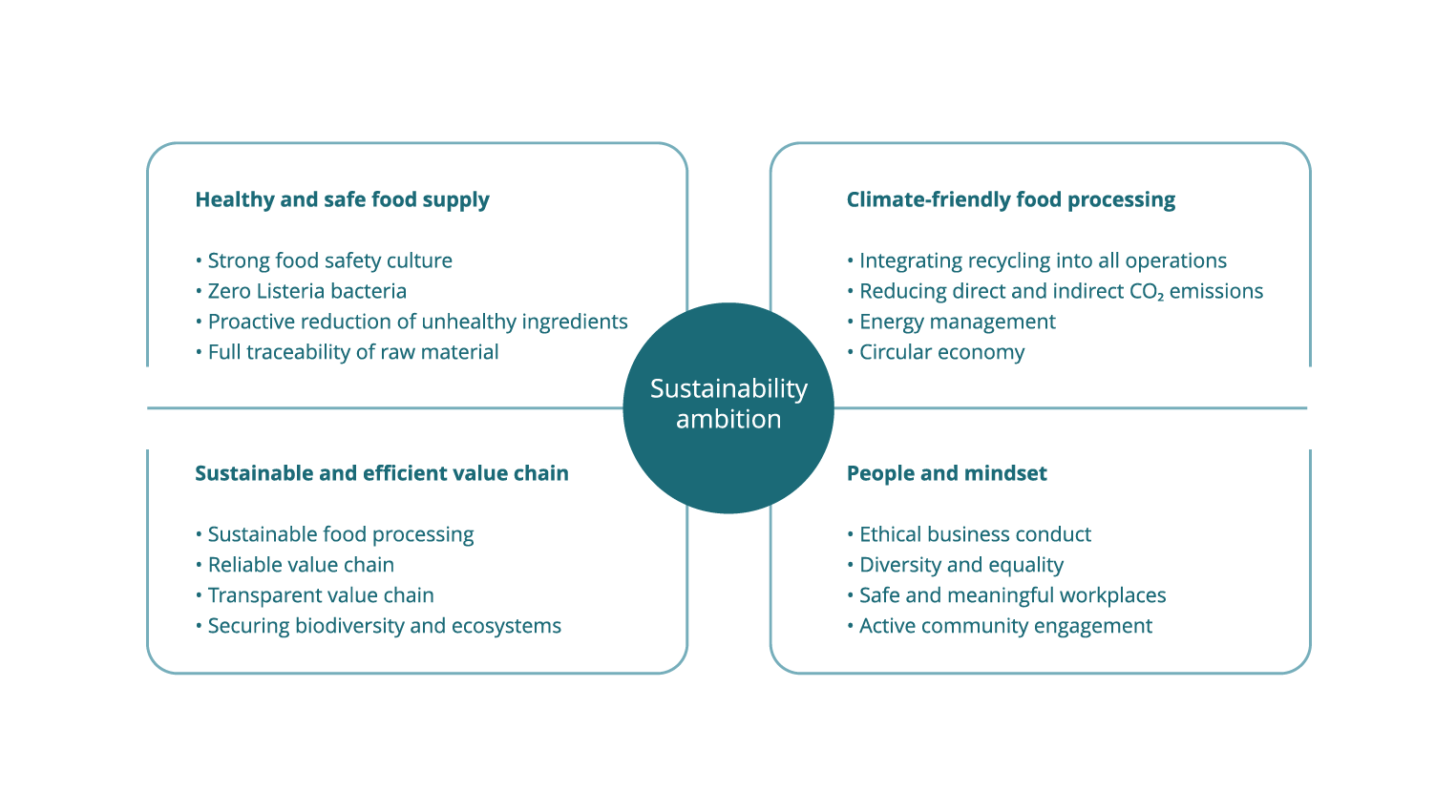
Milarex sustainability ambition

Our goal:
The benchmark for safe and sustainable salmon processing
What this means:
Make sustainable seafood affordable through sustainably sourced salmon efficiently processed in the best climate friendly way, in accordance with ethical business conduct, securing a healthy and safe food supply.
Our strategic approach and commitments
Milarex sustainability ambition - The four key themes in our sustainability strategy
We believe that sustainable business conduct drives superior performance and that this is the only way to create long-term value for all our stakeholders. Businesses that will be successful in the future will be those that serve society today. Our sustainability ambition is built on 4 key themes which covers the main priorities from the material assessment.
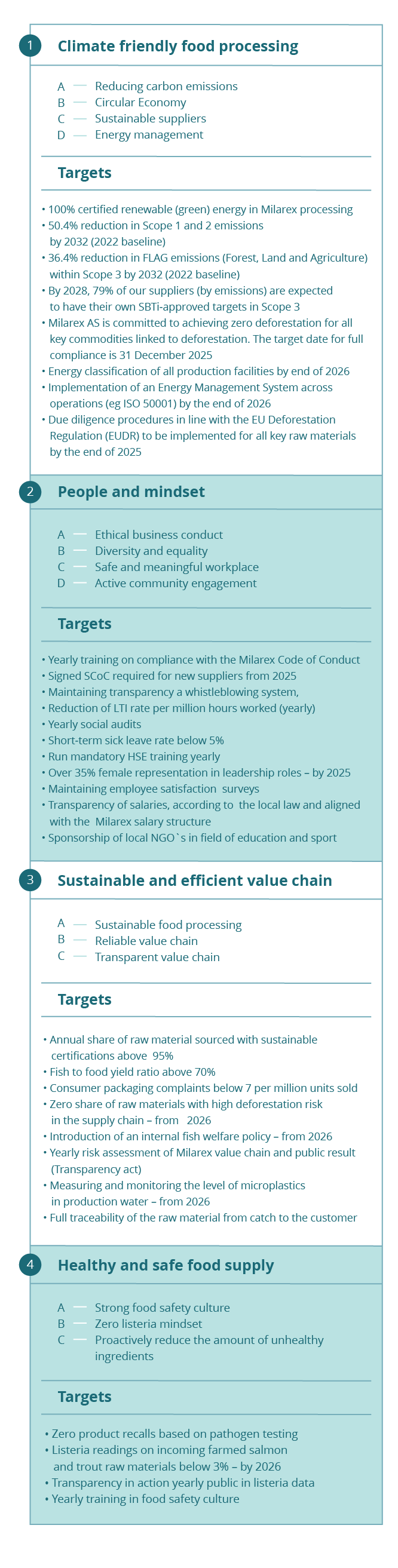
Our sustainability commitments
To us sustainability is a natural part in being a successful company and we always strive to act in an transparent, responsible and ethical way, expecting our business partners to do the same.
To keep improving our sustainability performance and meet our ambitions we need to develop and make some commitments. Below you will find our key targets for the period 2020 – 2026, together with the status of each commitment at the end of 2026. Our targets for the next period are being set and will be published here once approved.
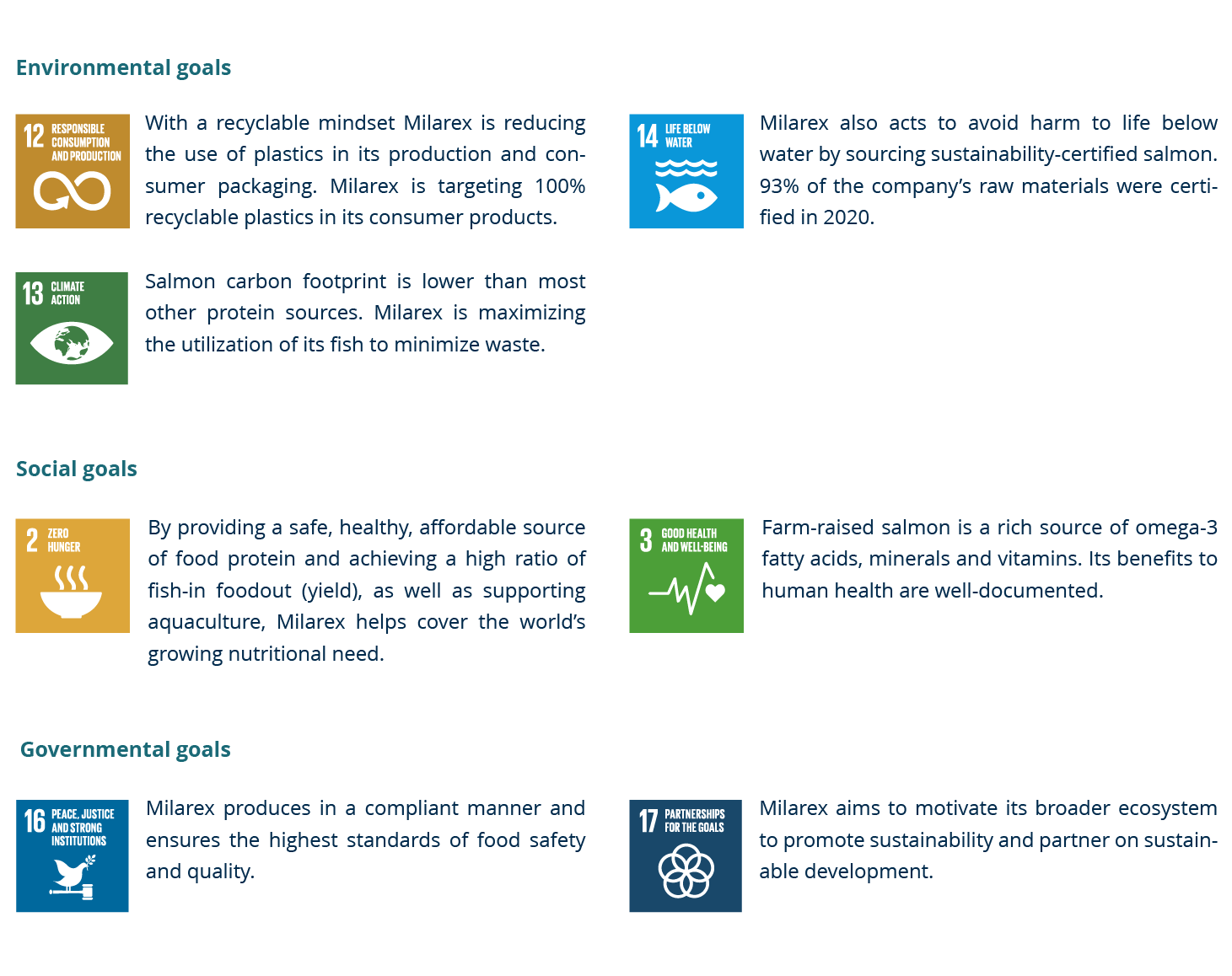
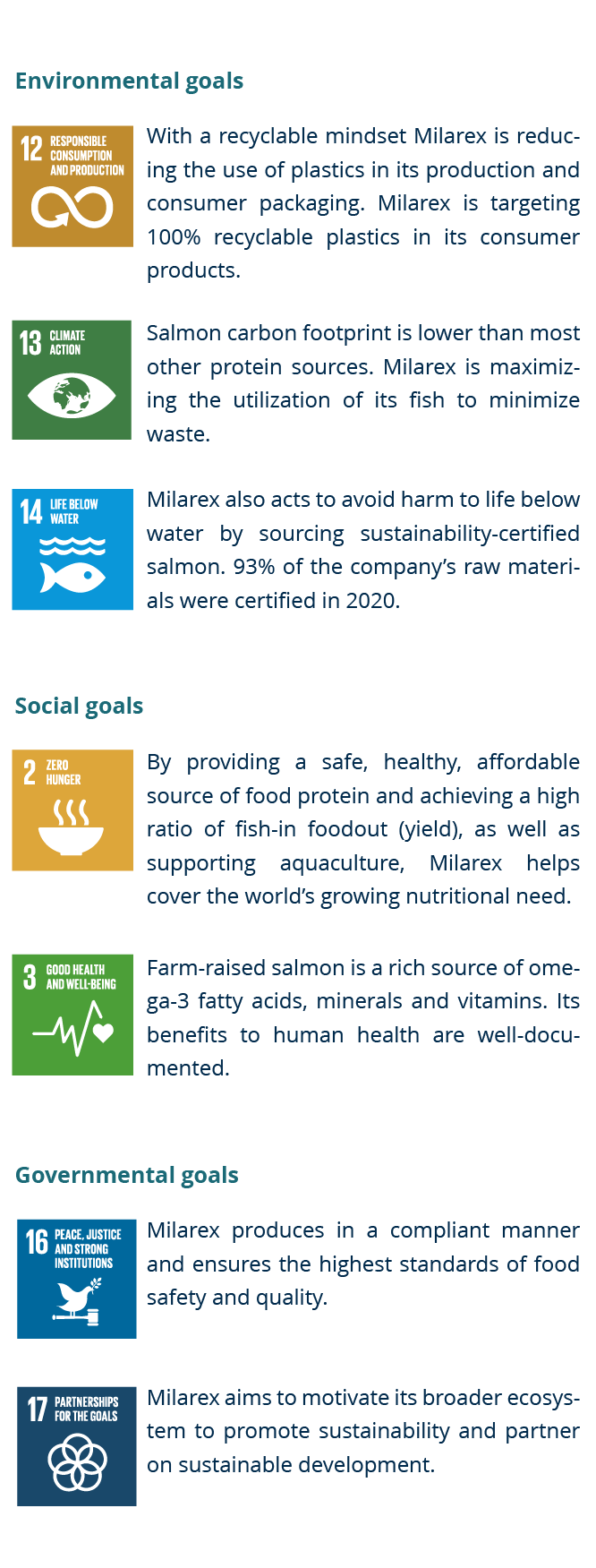
We align with relevant SDGs
In September 2015, the United Nations adopted 17 UN Sustainable Development Goals (SDGs) in an effort to end extreme poverty, reduce inequality and protect the planet by 2030. These goals were developed to guide society, governments and businesses to join efforts in changing towards a more sustainable development. The SDGs highlighted below are the most relevant and material for Milarex.
How did we identify and prioritize the important ESG topics?
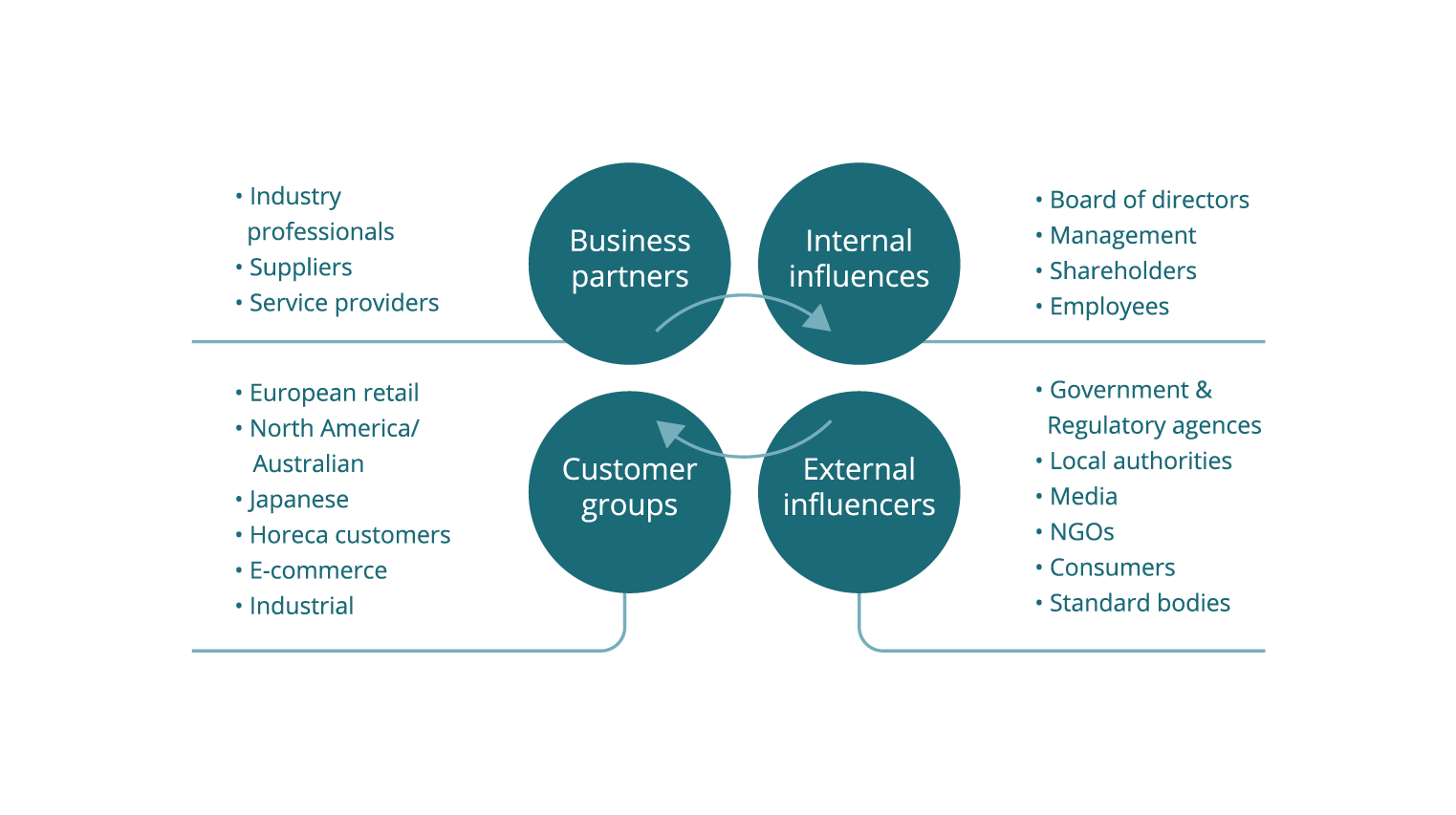
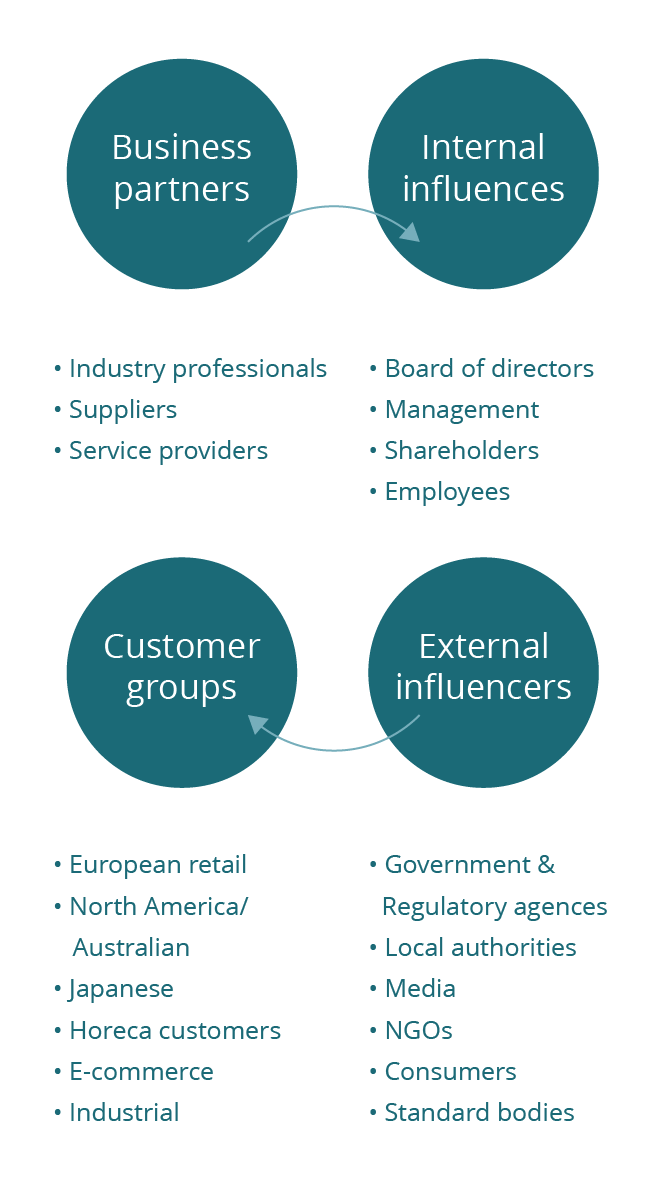
We engage with our stakeholders:
Stakeholder engagement is essential to grow our business and to reach our ambitious targets. By understanding the needs and interests of our stakeholders, our strategy aims to better meet their expectations and prioritize our reporting on the issues that our stakeholders take interest in. We have a dialogue with our stakeholders, we ask our stakeholders about what is important to them and we review and analyze what our stakeholders express through their own actions and publications.
We prioritize the important topics
We live in an uncertain and constantly changing world. A material assessment helps us identify and prioritize on the sustainability issues that matter most to stakeholders and our business. An issue is material to Milarex if it meets two conditions. Firstly, it impacts our business significantly in terms of growth, cost or risk. And secondly, it is important to our stakeholders. We revise our assessment to make sure it reflects changes in our business and the external environment. A major external revision and update is done in cycles of three years.
Milarex Material Topic
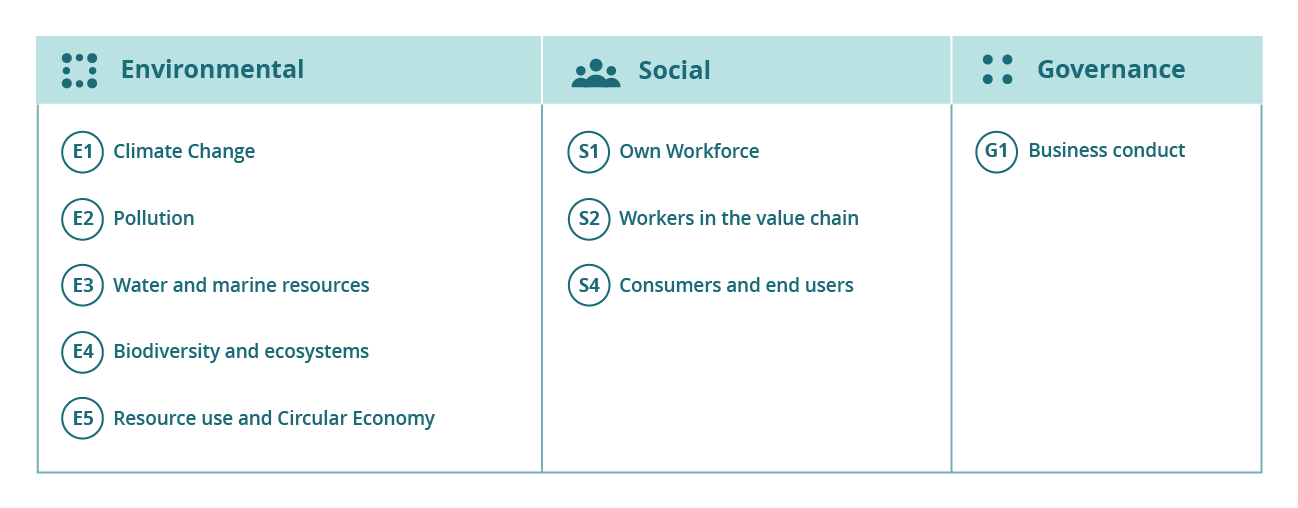
Identification of Material Topics Based on Double Materiality Assessment (DMA)
We have chosen to apply the Double Materiality Assessment (DMA) methodology as a structured approach to identifying and assessing key sustainability topics that are material to our business and to our environmental and social impacts. This approach aligns with the requirements of the European Sustainability Reporting Standards (ESRS) and forms the foundation of transparent and accountable ESG reporting.
In order to guarantee objectivity and consistency with leading market practices, an independent Norwegian consulting firm with extensive experience in sustainability, regulatory compliance, and materiality assessment was engaged to support the process.
The DMA process included the following steps:
Systematic identification of relevant sustainability topics based on a structured analysis of the ESRS framework (particularly ESRS 1 and ESRS 2).
Assessment of impact materiality, evaluating how Milarex operations affect environmental, social, and governance (ESG) matters both directly and across the value chain.
Assessment of financial materiality, identifying ESG-related risks and opportunities that could influence the company’s financial position, performance, or access to capital.
Engagement with internal and external stakeholders, including representatives of investors, board of directors, employees and partners in the value chain
Application of a transparent methodology for topic prioritization, considering the scale, scope, and irremediable character of impacts, as well as financial significance.
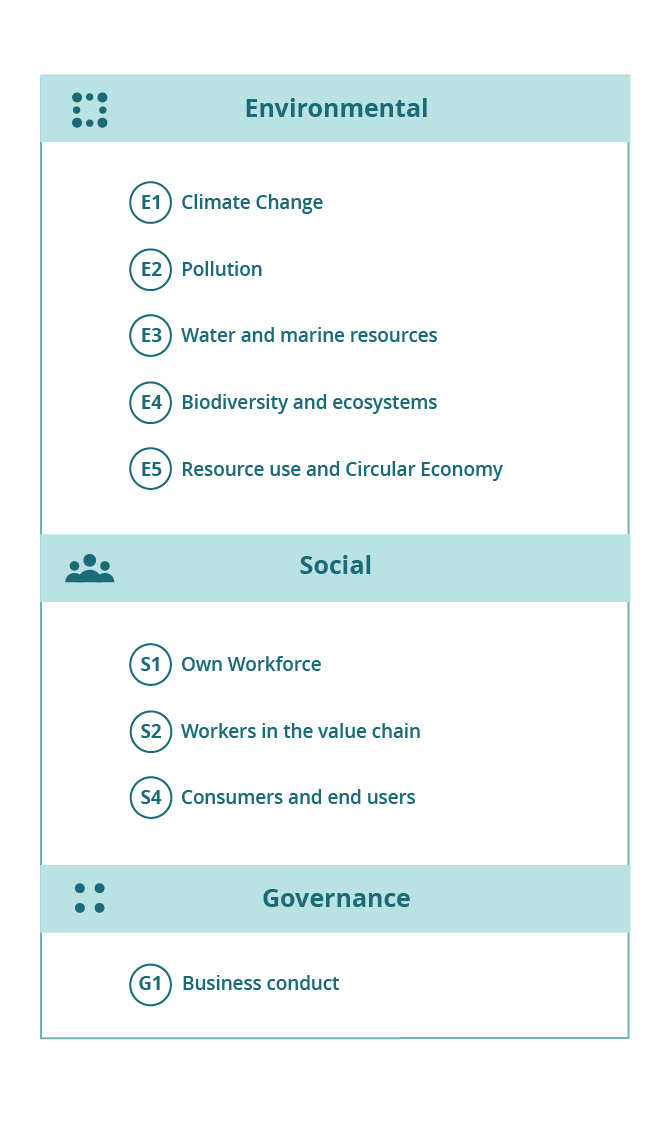
As a result, a final list of material topics was defined, categorized under Environmental, Social, and Governance, and aligned with the corresponding ESRS topical standards. This list forms the basis for ongoing sustainability reporting and ESG risk management at Milarex.
SBTi – Our Climate Targets
The Science Based Targets initiative (SBTi) is a global partnership that helps companies set science-based targets to reduce greenhouse gas (GHG) emissions. These targets define how much and how quickly organizations need to reduce their emissions in order to avoid the worst impacts of climate change.
SBTi supports companies by:
Defining and promoting best practices in emissions reduction and net-zero targets in line with the latest climate science.
Developing standards, tools, and guidelines to help businesses and financial institutions set science-based targets aligned with global climate goals.
Conducting independent validation and verification of corporate climate targets through its dedicated entity, SBTi Services.
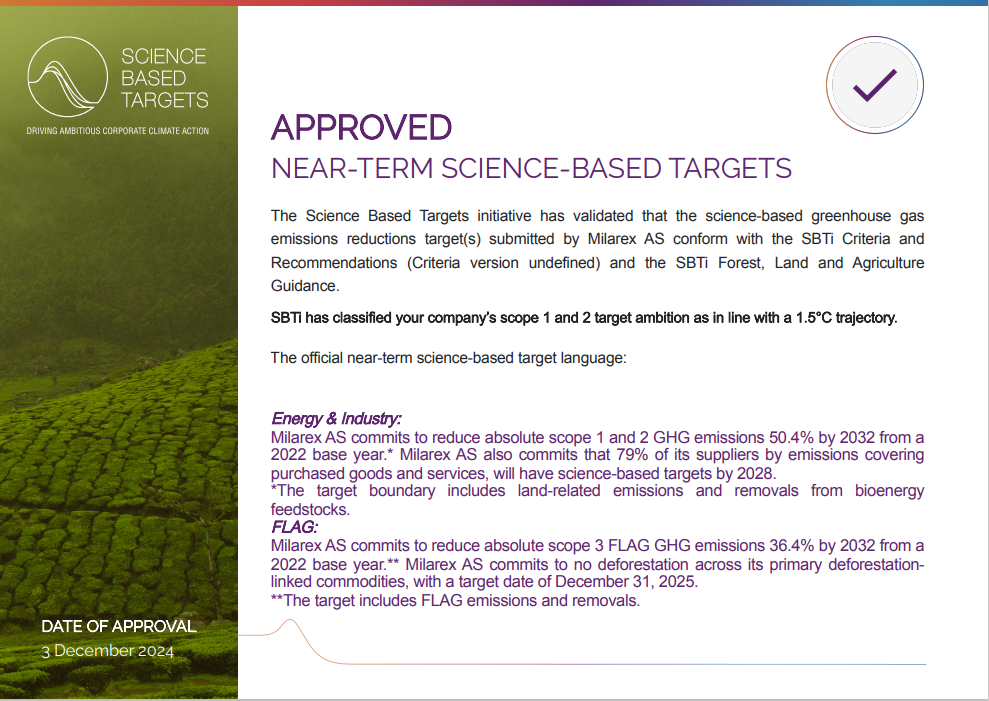
In line with our commitment under the SBTi FLAG target, as of 31 December 2025 we confirmed the absence of deforestation and land-use conversion in the supply chain of our primary raw materials (salmon, trout), based on ProTerra or Europe Soya certification of the soy used in feed, combined with feed-supplier declarations and certification of the salmon and trout we source, covering the substantial majority of our procurement volume. The remaining, smaller portions of the supply chain remain under our ongoing oversight.
We review and update this status annually, as part of our due diligence programme aligned with SBTi FLAG requirements and prepared in advance of the requirements of the EU Deforestation Regulation (EUDR).
Milarex measuring carbon footprint
As part of our commitment to climate action, Milarex has partnered with an external, independent provider of greenhouse gas (GHG) emissions calculation and reporting tools. The aim of this collaboration is to ensure an independent, objective, and best-practice-compliant approach to measuring the carbon footprint across our entire value chain.
The tool supports us in calculating and reporting emissions data, particularly in relation to Scope 3 indirect emissions, which constitute a significant portion of our climate impact. Accurate emissions data serve as the foundation for setting ambitious, science-based GHG reduction targets, in alignment with the Science Based Targets initiative (SBTi).
This collaboration marks another important step in Milarex’s journey towards transparency, accountability, and meaningful climate action.
Milarex greenhouse gas emissions (t CO2e)
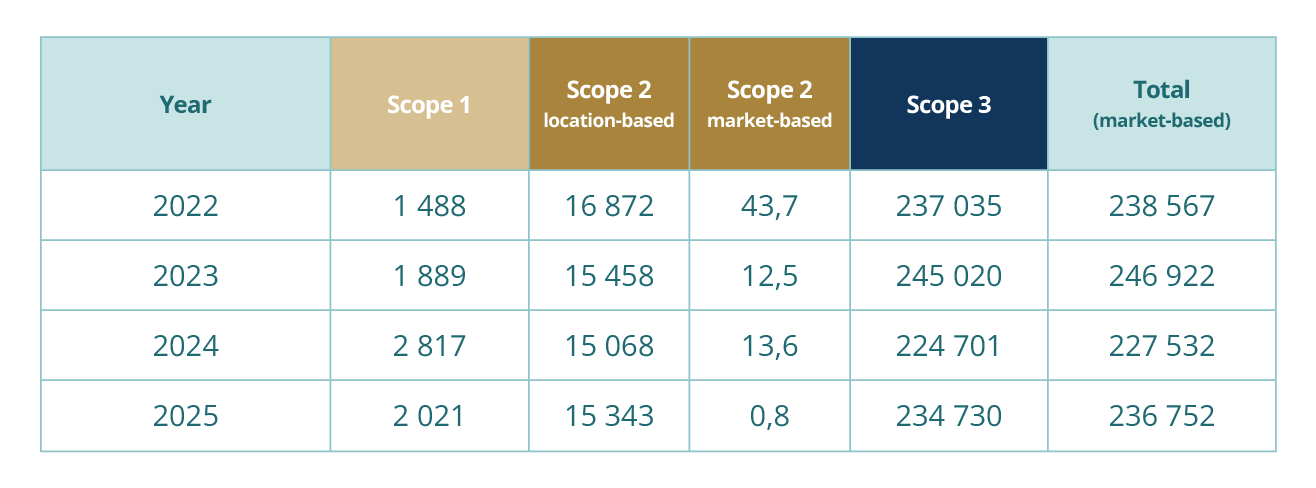
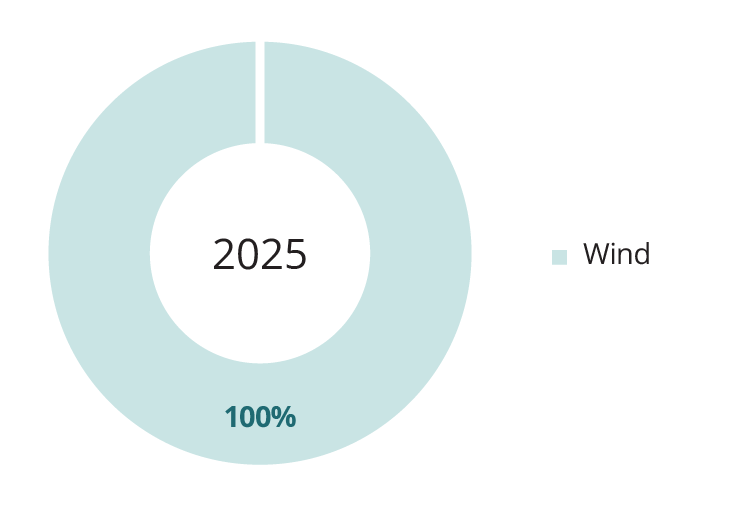
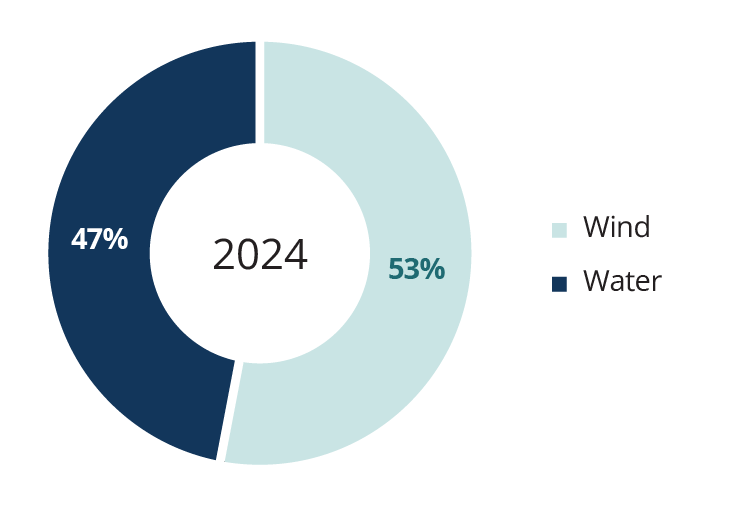
In 2025, we purchased Certificates of Origin (Guarantees of Origin) on the Polish Power Exchange (TGE) in a volume corresponding to 100% of the electricity consumption of our head office and production plant in Poland. These certificates confirm that the corresponding amount of energy was fed into the grid from renewable sources. This does not mean that the energy physically delivered to our facilities comes exclusively from RES - the grid energy reflects the national mix. The certificates are an instrument recognised under the GHG Protocol methodology (Scope 2, market-based) for carbon footprint accounting.
Beyond the way we account for purchased electricity, we want to manage energy better at source. To strengthen our control over energy use and, as a result, optimise consumption and the related greenhouse gas emissions, we plan to implement an energy management system based on ISO 50001, starting the system operational in 2027. The standard provides a structured framework for monitoring energy use across our sites, identifying the most energy-intensive processes, setting measurable efficiency targets and verifying the effects of the investments we make. Energy efficiency is the most direct lever we have over our Scope 1 and Scope 2 emissions, so a systematic approach to energy management supports the science-based reduction targets approved for Milarex by the SBTi.
Methodology: emissions are calculated in accordance with the GHG Protocol Corporate Standard using the operational control approach, with 2022 as the base year. Scope 2 is reported both location-based and market-based, in line with the GHG Protocol dual reporting requirement; the Total column reflects the market-based figures. No carbon credits or offsets are used in the figures above.
Sources of Guarantees of Origin purchased by Milarex PL: